What's new

Greenacres,FL: Lear 60 crash after icing encounter kills 9 (1 November 2026)

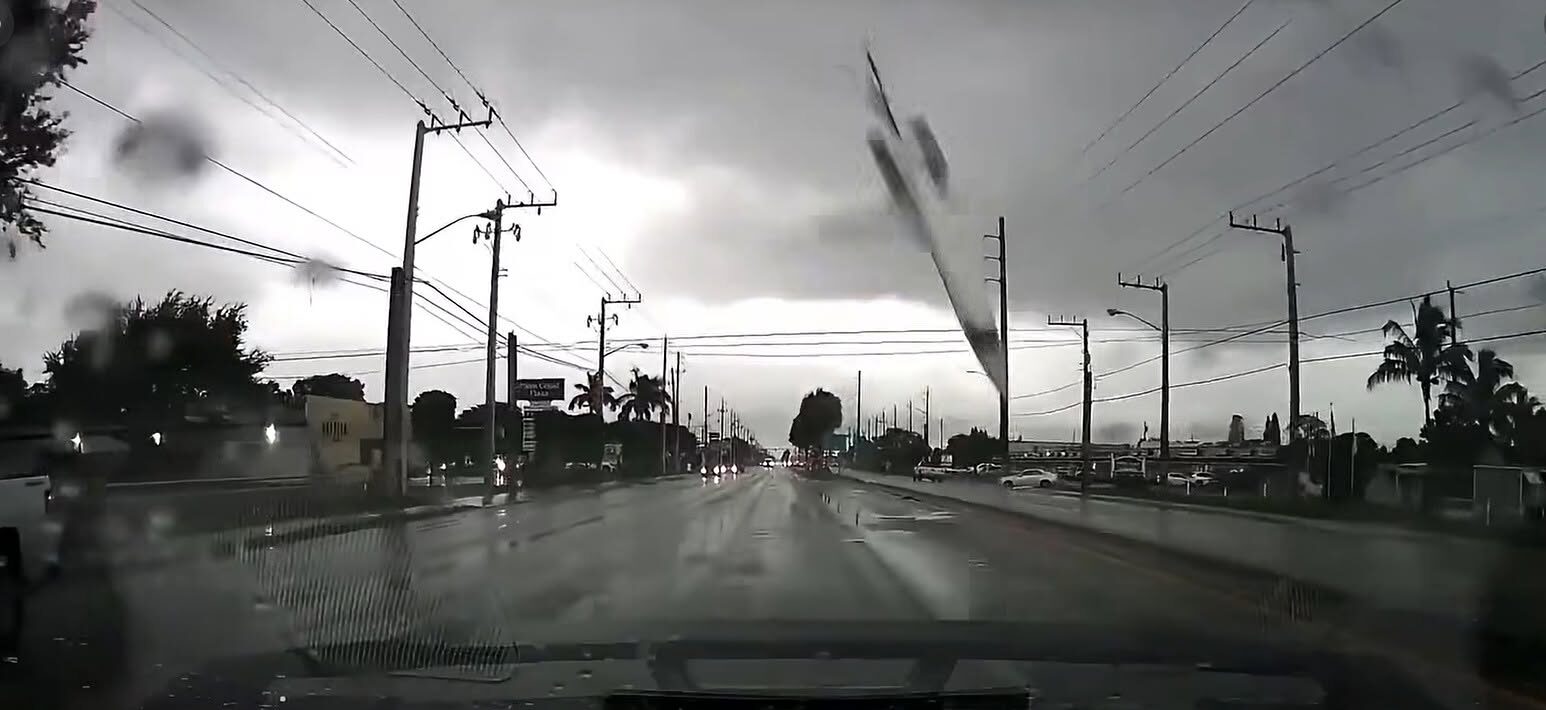
I read reports that say the left elevator was found 4 miles from the crash site.
 
They asked and were denied a turn to the right.
Sometimes you gotta invoke 91.3(b) and tell the controller that YOU, not they, are the final authority responsible for the safety of the flight and that you're making the turn, not asking to make the turn. What's that old line? When the pilot screws up, the pilot dies, but when the controller screws up, the pilot still dies.
 
On the Cessna Twin group, A. P. Miranda posted this. I thought it was good enough to copy here. All of the following text is from his post.

A.P. Miranda · ·

A 22,000-Hour Pilot’s Perspective on the Learjet 60 Crash

Like many of you, I’ve been pulled into numerous conversations regarding the tragic Learjet 60 crash in Florida. Specifically, people are focused on the heartbreaking Air Traffic Control audio featuring the young co-pilot. As a semi-retired commercial pilot with 22,000 hours—most of it spent flying private jets and specializing as a CFI transitioning young aviators into turbojets—I feel compelled to offer an experienced perspective on what transpired.

While the NTSB will determine the official cause, a few indisputable aeronautical facts provide a very clear picture of what went wrong.

1. The Weather Was No Surprise

There is a narrative circulating on social media that the weather "rapidly and unexpectedly deteriorated" around the crew. This is flatly untrue. By law, a flight crew must request and receive a standard weather briefing. Twelve hours before wheels up, an active SIGMET (Significant Meteorological Information) warned of severe thunderstorms, moderate icing, and turbulence directly along their planned route. A SIGMET isn't a suggestion; to a professional pilot, it is a definitive map of where not to fly. Safe, stable alternate routing was available. They chose to punch through the line anyway, falling victim to "get-there-itis."

2. "Managing" Ice Is a Deadly Strategy

On the ATC audio, the co-pilot notes they are "taking on ice" and, more alarmingly, that they are "managing the ice." This indicates they sat in known icing conditions relying entirely on the aircraft's de-ice systems.

This is a fundamental failure of airmanship. De-ice equipment is designed to buy you time to escape icing conditions—not to allow you to sustain flight within them. The system has design limits; Mother Nature does not. A seasoned pilot immediately goes up, down, or turns 180 degrees the moment ice begins to accumulate. To "manage" it in a convective cell shows a severe misunderstanding of both aircraft systems and high-altitude meteorology.

3. The Aerodynamics of a Tail Stall

Moments after encountering turbulence and ice at Flight Level 350, the crew requested a climb to FL370 to get above the weather. Almost immediately after beginning the climb, the aircraft pitched down violently into an unrecoverable dive.

Understanding high-altitude aerodynamics, I would bet with a high degree of certainty that they experienced a tailplane stall. Because of its shape and surface area, a horizontal stabilizer collects ice at a much faster rate than the main wings. The tail plane is essentially an upside-down wing; it generates downward lift to keep the nose up. When they initiated a climb, the aircraft slowed down. That reduction in airspeed, combined with severe ice accumulation, caused the tail plane to stall.
When a tail plane loses lift, the nose drops instantly. The aircraft plummets into a high-speed dive, rapidly entering an overspeed condition. At those Mach numbers, the aircraft likely experienced "Mach tuck"—where the center of pressure shifts rearward, the nose pitches down even harder, and the elevator controls become entirely ineffective. Rumors of the tail breaking off are likely a symptom of the extreme aerodynamic loads during the overspeed descent, not the initial cause.

4. The Breakdown in the Cockpit

Many are defending the 20-year-old co-pilot, pointing out that she was likely not the flying pilot. In a multi-crew environment, that is entirely irrelevant. Aviation relies on a two-step verification system. If a captain selects a hazardous, illegal route, it is the co-pilot's legal and professional duty to speak up and refuse the flight path.

I do not believe this young lady was careless, but she was fast-tracked into an environment her experience level could not support. She was highly talented, aced her training, and earned a type-rating—but her natural talent and marketability ultimately betrayed her.

The aviation industry frequently fails young, capable female pilots by not preparing them for cockpit power dynamics. No one sits these young women down during transition training to say: "Look, you are a young, sharp female in an industry dominated by older men. Some captains are going to dismiss your input, and others will be too distracted by your presence to respect your authority. You need to develop a reputation as a fierce, unyielding ball-buster. You have a legal duty to the safety of that aircraft. Never let a guy with gray hair intimidate you into silence while he makes fatal decisions."

She simply lacked the deep-seated operational experience to understand the fatal reality of airframe icing, likely assuming the jet's systems would save them. If she did recognize the danger, she was clearly too intimidated by the captain's authority to voice an absolute "No." Cockpit Resource Management (CRM) exists precisely so two pilots can balance each other's judgment. When that hierarchy becomes a dictatorship, tragedy follows.

This was not an unavoidable act of God. It was a chain of alarmingly poor decisions that began on the ground twelve hours before takeoff.
 
And this is a reply to that post:

Richard Murphy

That is exactly what I’ve posted on here and other places and people are angry when you point out the obvious.

The ATC tapes are public. They knew the cell was there the minute they requested direct Eleuthera, completed the turn, and saw it. They then asked for right deviations and the controller gave them “No further than 10 right for traffic”.

The fact is they pressed with a nearly 3 hour cold soaked plane into a steep gradient red painting cell, even just a few miles off-center, and hoped and prayed it would work out.

They BOTH did that. And they died for their decision.

The fact is that someone who got their Commercial ticket and CFI 12 months prior, spent 12 months repeating the same hour of flight instruction over and over again in a small geographical area, got thrown into a LR60 which is a Ferrari (I have thousands of hours in Lears, I know what it is), and was expected to know enough to back up the Captain just isn’t reality.

The operators who do this rely on the odds that it’s worked out for most people most of the time.

Until it doesn’t.

We need the FAA to force a 30 day course for first jet type rating applicants that covers both classroom and sim work on high altitude aerodynamics, meteorology, and reviewing 30+ accidents like this, both on paper and in the sim, to see what they did wrong, why it happened, so they don’t repeat it.

That’s what needs to happen. Sorry not sorry it will take time and be expensive. That’s the price you pay for putting a 20 year old barely 1,000 hour pilot with no real relevant prior experience into the jet.
 
The fact that the horizontal stab was found 4 miles from the main crash site suggests it may well have been separation of that component in severe or even extreme turbulence which caused the pitchover rather than a tail stall. We'll have to wait for deeper investigation before there's enough evidence to settle that issue.
 
My question is why did the turn east in the first place. Coming over the gulf they were headed almost directly to destination. So why turn east, then slightly NE, TOWARDS the worst of a storm they would have avoided completely had they kept going straightish.

I’m thinking icing caused an aerodynamic stall, then in an effort to recover, they over controlled and lost the elevator.
 
Well, one could understand why he found the repetition soul-crushing but I have found aviation-accident write-ups and videos to be educational, helpful and thought-provoking. I think they have helped me to be a better pilot.
 
One other point about tail-plane stalls...

In the 2009 Colgan DHC-8 accident, it appeared that the captain may have mistaken a wing stall due to icing-created airfoil distortion for a tailplane stall. There had recently been a lot of discussion about this phenomenon which may have created an expectation bias in the captain's mind, leading him to do exactly the wrong thing. We're a long way from having enough information about the event under discussion to make any informed judgments. I hope we go easy on the premature speculation which may get picked up by the non-aviation press in this high-vis accident and create confusion among the non-aviation public.

See https://aircrafticing.grc.nasa.gov/1_3_4_3.html for more on tailplane stall recovery. I highly doubt that the Lear's flaps were extended when trying to climb through FL350, which makes a tailplane stall a lot less likely (even with icing). The DHC-8's flaps were extended when the event began but then retracted (appropriate for tailplane stall but not for a wing stall) as the captain continued to take action, albeit the wrong action.
 
Last edited:
I remember that accident. I think might have been the first time I heard of a tailplane stall.
 
Sometimes you gotta invoke 91.3(b) and tell the controller that YOU, not they, are the final authority responsible for the safety of the flight and that you're making the turn, not asking to make the turn. What's that old line? When the pilot screws up, the pilot dies, but when the controller screws up, the pilot still dies.
Interestingly VAS aviation uploaded a video today where the pilot did exactly this. He enforced it by declaring an emergency after ATC tried to push back on a course change (has their reasons). It seemed tense for a minute but once the pilot said the magic words, ATC immediately went along with the program. I thought both sides handled it perfectly. This should be a training video for new/young jet pilots.
 
FWIW, as an ATC, I was always taught that if it seems like the pilot was in any kind of an emergency situation, whether they declared/hinted/or even seemed to know, we should consider it as an emergency, and start doing whatever we needed to do to assist in the situation, even if that meant that we safely violated some of our rules, or the FAR's.
 
I don't know if I have any additional good info to present. I think this was less about airframe icing...although a contaminated wing doesn't help when you are dealing with significant turbulence. There have been some good studies related to Turbulence Near Thunderstorms, otherwise known as TNT. What isn't discussed when we are training is gravity waves that frequently occur above/near thunderstorm tops. Over the years I have tried to incorporate this into my articles/books/classes/blog so when you move into an aircraft that can fly at these altitudes, you aren't blindsided by the dangers.

I believe what I described back in 2019 in this blog post is most likely what contributed to this tragic accident.
 
Last edited:
One other point about tail-plane stalls...

In the 2009 Colgan DHC-8 accident, it appeared that the captain may have mistaken a wing stall due to icing-created airfoil distortion for a tailplane stall. There had recently been a lot of discussion about this phenomenon which may have created an expectation bias in the captain's mind, leading him to do exactly the wrong thing. We're a long way from having enough information about the event under discussion to make any informed judgments. I hope we go easy on the premature speculation which may get picked up by the non-aviation press in this high-vis accident and create confusion among the non-aviation public.

See https://aircrafticing.grc.nasa.gov/1_3_4_3.html for more on tailplane stall recovery. I highly doubt that the Lear's flaps were extended when trying to climb through FL350, which makes a tailplane stall a lot less likely (even with icing). The DHC-8's flaps were extended when the event began but then retracted (appropriate for tailplane stall but not for a wing stall) as the captain continued to take action, albeit the wrong action.
Agreed. I spoke with Kurt Blankenship who is a NASA test pilot in the Twin Otter when I visited the NASA Glenn Facility in Cleveland and asked him about the Colgan accident. He said there were lots of mistakes made and this was not related to airframe icing accreting on the airframe. I wrote about ICTSs an article I wrote for FLYING magazine.

This accident in Florida wasn't associated with an ice contaminated tailplane stall (ICTS). Those almost always occur when on an approach to land with full flaps extended and usually occur on the upper range of the flap speed. You can't have a tailplane stall without flaps extended...and, in general, most aircraft are not conducive to a tailplane stall. It could be that the extensive rate of descent and loss of control could have been due to damage to the tailplane as a result of significant convective-induced turbulence or gravity wave.

When these accidents occur I receive dozens of emails and phone calls from NYT, Washington Post, Fox News, etc. asking for my expert analysis. In fact, I found out about this accident from one of those emails. I just refer them to the NTSB to avoid any speculation that is not rooted in facts.
 
The way it's supposed to work...
It's good to see it called out, but routing around convection occurs every day during the warm season. It's the nature of the beast.
 
I have certainly never had ATC tell me to or request that I not do so when I say I need to divert around weather. Usually, they just asked me to tell them when I can turn back on my original course. And there have been many times when they will suggest a different heading to avoid weather.
 
Top Bottom